

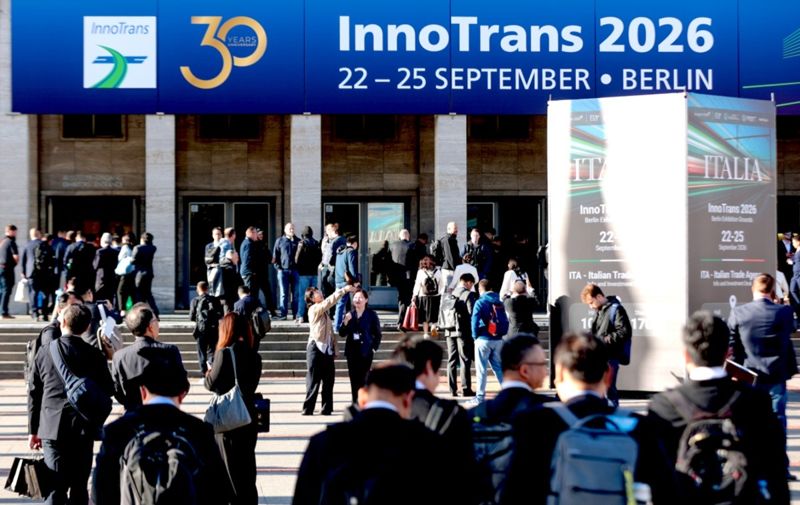
At InnoTrans 2026, the global rail industry is showcasing the future of mobility shaped by artificial intelligence, autonomous inspection, advanced signalling, alternative propulsion and next-generation communications.
Yet one of the world"s fastest-growing rail markets remains surprisingly underrepresented in the Western industry"s conversation: Central Asia. That contrast is becoming increasingly difficult to ignore.
The 30th anniversary edition of InnoTrans opened in Berlin on September 22 with a record 3,170 exhibitors from 59 countries, 42 exhibition halls and 180 world premieres. The fair runs until September 25. AI and robotics are among the dominant themes, with technologies increasingly moving from laboratories into rolling stock, infrastructure inspection and maintenance.
China is highly visible in this transformation with 245 exhibitors from mainland China are represented at InnoTrans 2026, compared with the Focus on Railway infrastructure five heavyweights from Kazakhstan and six key enterprises from Uzbekistan. The figures underline a striking imbalance: Central Asia is strategically important for the development of Eurasian rail corridors, yet its commercial representation at Europe"s largest rail technology gathering remains comparatively small.
This matters because the railway geography east of the Caspian Sea is changing rapidly.
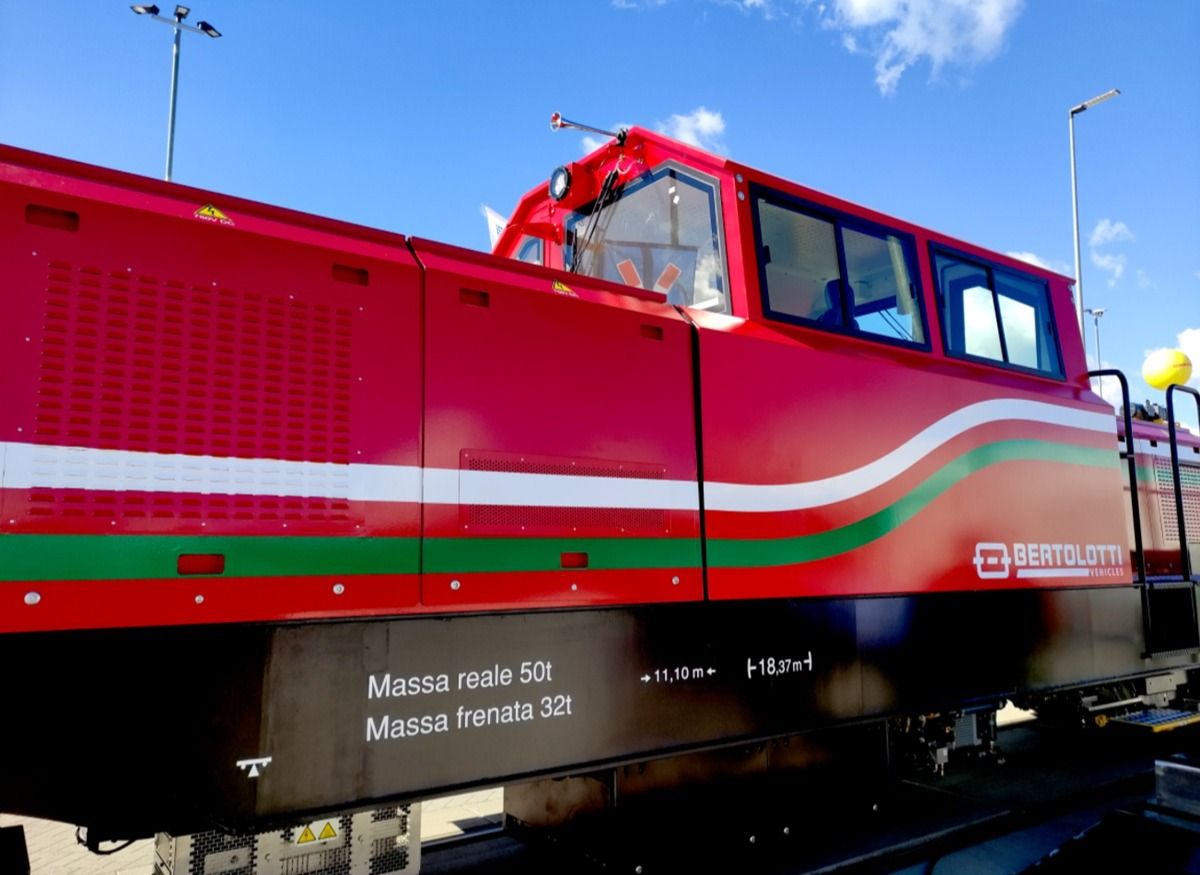
China"s cross-border freight railway network recorded 15,506 freight-train journeys in the first five months of 2026, according to China State Railway Group data cited by Global Times. Of these, 6,175 were China-Central Asia freight trains, while China-Europe Railway Express services accounted for 9,331 journeys.
At Alashankou, the principal rail gateway between China"s Xinjiang region and Kazakhstan, China-Europe and China-Central Asia freight services surpassed 6,000 train journeys in 2026, reaching the milestone 41 days earlier than in the previous year. Customs clearance for freight trains has been reduced to less than four hours.
At Erenhot, the China-Mongolia gateway, more than 3,500 China-Europe freight trains had passed through by September 2026, carrying 3.32 million tonnes of cargo, up 25,11% year on year. High-value goods such as new-energy vehicles, electronics and household appliances now account for more than 40% of the cargo mix.
The next phase is even more consequential: Central Asia is becoming a network rather than merely a transit region.
The China-Kyrgyzstan-Uzbekistan railway, a flagship Belt and Road Initiative project, is now under construction. The planned line is more than 500 kilometres long, including approximately 305 kilometres in Kyrgyzstan. In September, the first 210-metre tunnel on the Kyrgyz section was completed; reported construction progress on that section had reached 17%. Once operational, the railway is intended to create a new route from Kashgar through Kyrgyzstan to Andijan in Uzbekistan and onward towards the Middle East and Europe.
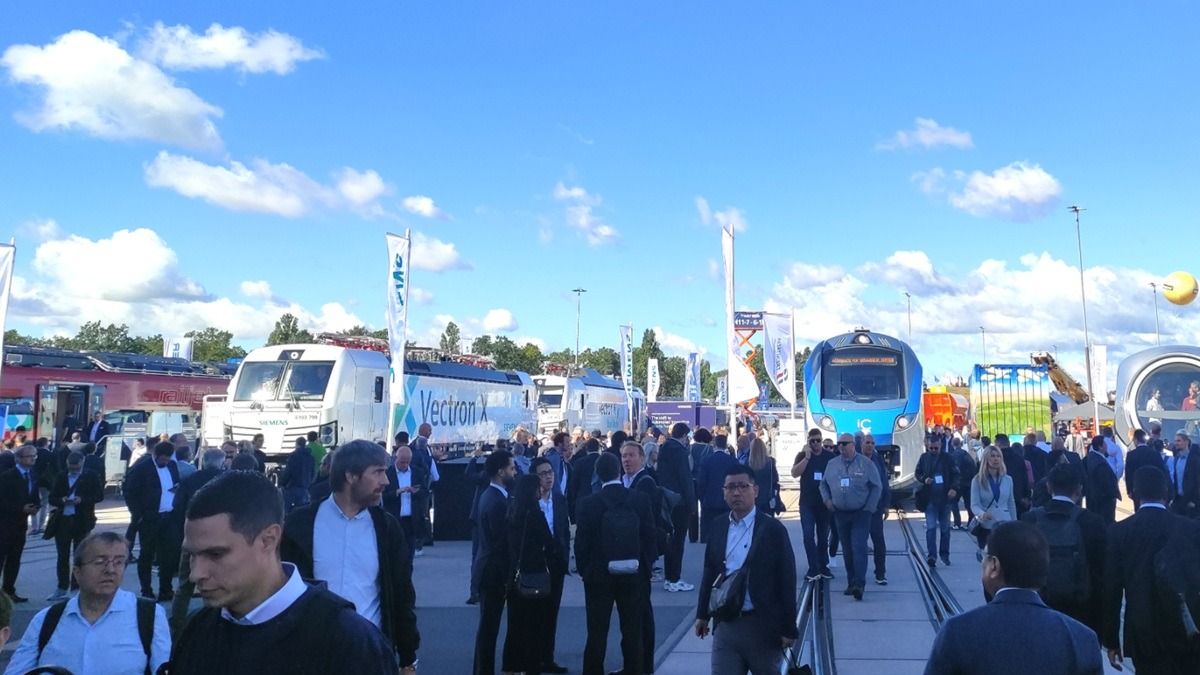
Another development demonstrates how quickly these corridors are becoming operational. In September, the first 55-container block train from China to Iran via Kazakhstan, Uzbekistan and Turkmenistan was launched. The route covers more than 6,000 kilometres, with an expected transit time of 14-16 days. Uzbekistan"s container railway operator said the service could form the basis for regular block-train operations.
Meanwhile, the Middle Corridor across the Caspian Sea is also expanding. During January-August 2026, container traffic on the Trans-Caspian International Transport Route reached 53,574 TEU, up from 48,326 TEU in the same period of 2025, an increase of about 11%. Around 80% of the containers travelled westward, however, highlighting the continuing challenge of developing balanced eastbound cargo flows.
Against this backdrop, the technologies displayed in Berlin acquire a very practical meaning.
Chinese suppliers are presenting solutions covering intelligent freight systems, signalling, control, maintenance and automation. HollySys Rail, for example, is showcasing hardware and software for full-life-cycle railway maintenance and management systems at InnoTrans. The company says its onboard train-control systems have been installed on more than 3,400 EMUs, while more than 1,300 trackside train-control systems have been commissioned across 83 mainline railways covering more than 16,000 kilometres.
Huawei and CASCO are also advancing the communications layer of the digital railway. Their FRMCS-based TACN system was presented in 2026 as a new train-control architecture using moving-block operations; the developers reported a potential 60% increase in rail transport capacity on deployed freight corridors.
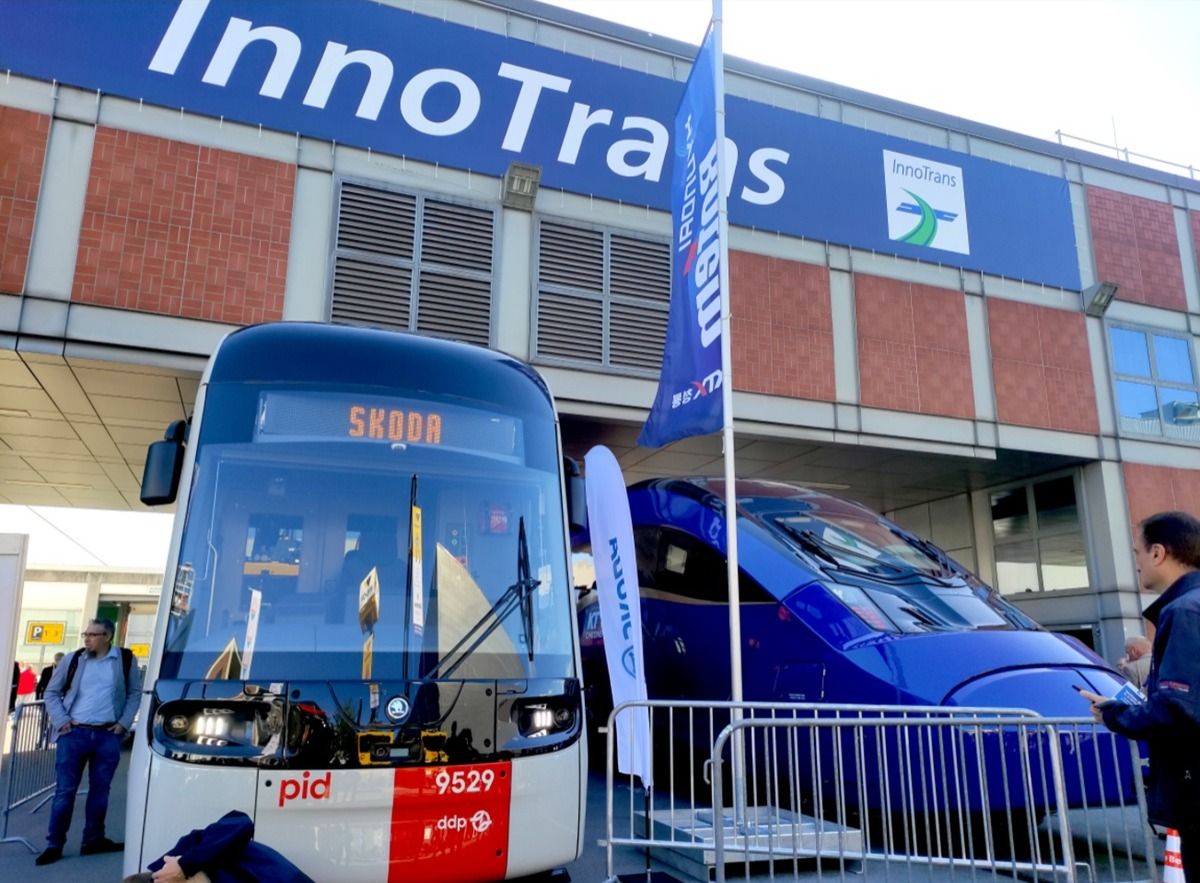
InnoTrans itself reflects the same technological direction: AI, robotics and automation are being applied to rolling stock, infrastructure inspection and maintenance rather than remaining purely conceptual technologies.
For Central Asia, this is precisely where the opportunity lies.
Kazakhstan and Uzbekistan are not simply countries through which Chinese trains pass. They are developing railways, border terminals, logistics centres and multimodal corridors that increasingly require the same technologies now being demonstrated in Berlin: predictive maintenance, autonomous inspection, signalling, communications, cybersecurity, digital twins, freight automation and energy-efficient rolling stock.
The strategic question for Western rail companies is therefore less about whether Central Asia belongs to the future of Eurasian rail, the infrastructure numbers already demonstrate its growing importance, and more about whether European suppliers will participate in the next stage of that development.
InnoTrans 2026 has made the technological direction unmistakable. The emerging Eurasian railway system is becoming faster, more automated, more digital and increasingly interconnected.
The next major meeting point will be Asia itself. Messe Berlin will launch InnoTrans Asia in Singapore from September 7–9, 2027, specifically targeting the rapidly expanding Asian transport market.
For the rail industry, that may prove to be more than a new trade fair. It could become the place where the technology showcased in Berlin meets the infrastructure reality of the New Silk Road.
Autor: Christiane Isenberg