

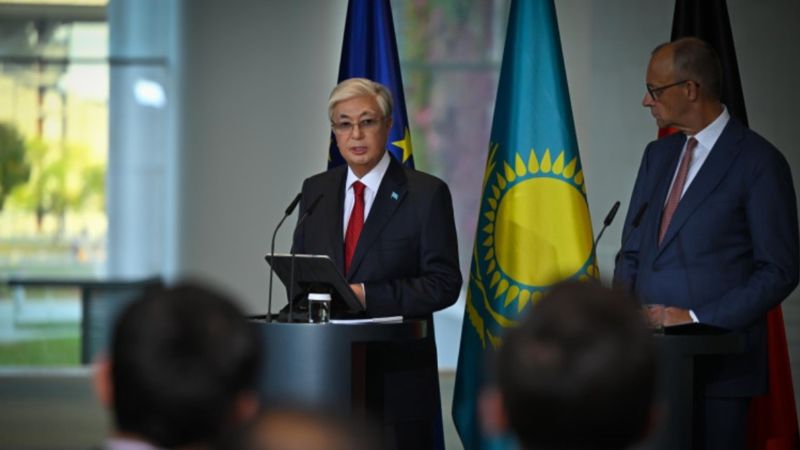
President Kassym-Jomart Tokayev"s visit to Germany on 28-30 September 2026 deserves to be viewed through a wider lens than that of conventional energy diplomacy.
The most consequential message of the visit was not simply that Kazakhstan can supply Germany with oil, uranium or other strategic resources. It was that Kazakhstan is prepared to participate in the creation of new industrial value chains linking Central Asia with Europe and that Germany, at a moment of economic uncertainty, has a great deal to gain from accepting that offer. This is a proposition Germany should take seriously.
Why Germany Needs New Economic Partners
The German economy is undergoing a structural adjustment whose dimensions are difficult to ignore. The country"s industrial model, long sustained by relatively inexpensive energy, exceptionally strong manufacturing capabilities and broad access to expanding global markets, has become considerably more fragile. Energy costs remain a burden, competition from China has intensified, geopolitical tensions are fragmenting established supply chains, and many German companies are reconsidering where future production should take place.
Germany consequently needs more than short-term economic stimulus. It needs diversification, new markets, resilient supply chains and, above all, new industrial opportunities. This is precisely where Kazakhstan becomes interesting.
Kazakhstan and Germany Beyond the Oil Trade
The bilateral relationship is already more substantial than its relatively modest visibility in Germany would suggest. Kazakhstan is Germany"s most important economic partner in Central Asia, bilateral trade runs into several billion euros annually, and hundreds of German companies are active in the country. Kazakhstan has also become an increasingly important supplier of crude oil to Germany. In 2025, more than ten million tonnes of Kazakh oil reached the German market, reinforcing Kazakhstan"s importance for the diversification of Germany"s energy supplies.
Yet to define Kazakhstan primarily through oil would be to misunderstand the strategic opportunity.
According to Tokayev, Kazakhstan possesses 21 of the 34 raw materials listed by the European Union as critical.
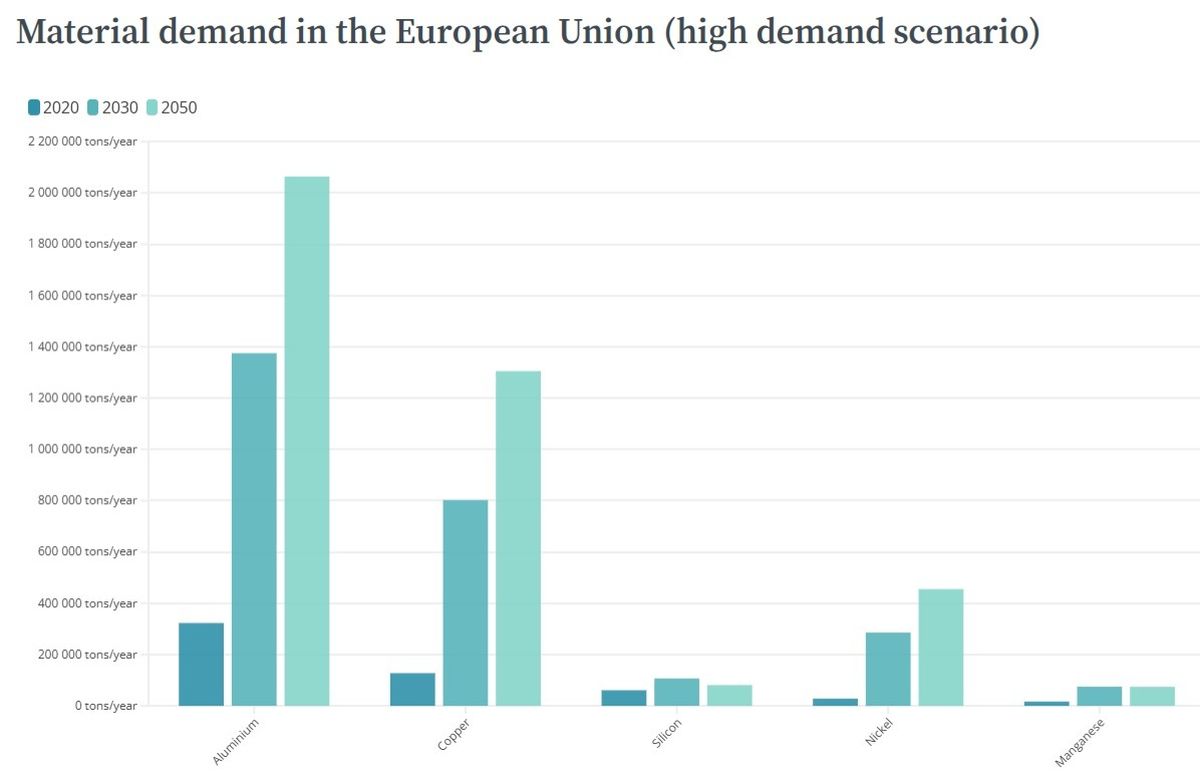
For Germany, the significance of this fact goes far beyond the question of secure imports. The real opportunity lies in moving further up the value chain: processing resources in Kazakhstan, developing advanced materials, manufacturing components and establishing industrial capacity that serves both the Kazakh market and the wider markets of Central Asia and Europe.
This is where the economic interests of the two countries become unusually complementary.
Germany possesses precisely those capabilities Kazakhstan needs for the next stage of its industrial development: sophisticated engineering, machinery, automation, industrial software, environmental technology, research expertise and the vocational education system for which Germany is internationally recognised. Kazakhstan, meanwhile, offers resources, energy, land, a rapidly developing economy and an exceptional geographical position at the intersection of Europe and Asia.
The most interesting model is therefore not one in which Kazakhstan supplies raw materials and Germany exports finished machinery. It is one in which both countries participate in the same value chain.
Kazakh resources can be processed with German technology; components can be manufactured locally; engineers and skilled workers can be trained through German-Kazakh programmes; research institutions can develop new applications; and the resulting products can be sold into markets far beyond Kazakhstan itself. That would transform the relationship from one centred on trade into a deeper industrial partnership.
The Middle Corridor and Access to Central Asia
The same strategic logic applies to transport. Kazakhstan is becoming an increasingly important node in the Trans-Caspian International TransportRoute, the Middle Corridor connecting China and Central Asia with Europe via the Caspian Sea and the Caucasus, with onward connections through Türkiye or across the Black Sea. For Germany, the significance of this route should not be reduced to the question of whether it can provide an alternative corridor for individual shipments.
The more consequential question is whether German companies will help shape the infrastructure of this emerging Eurasian trade route.
Rail technology, port infrastructure, logistics management, digital freight systems and industrial hubs could become areas of long-term German participation. A logistics centre in Kazakhstan connected to the Caspian Sea would not merely serve Kazakh trade. It could provide German companies with a platform from which to reach the wider Central Asian market while creating a more diversified connection between European and Asian supply chains.
This is one of the least appreciated aspects of Kazakhstan"s economic significance for Germany: geography itself has become an economic asset.
The country sits at a point where several major economic spaces meet. Its importance therefore cannot be measured solely by the size of bilateral trade. A successful German-Kazakh partnership could give German companies greater access to a broader Central Asian market while providing Kazakhstan with European technology and industrial expertise.
Education and Technology Transfer in Kazakhstan
Tokayev"s emphasis on education and science is equally significant. Industrial investment without human capital eventually reaches its limits. The most sustainable form of German engagement would therefore combine factories and infrastructure with universities, vocational training, applied research and technology transfer.
A German industrial project in Kazakhstan should ideally create not only production capacity, but also opportunities to train engineers. A logistics investment should develop expertise in logistics. A mining project should generate knowledge in processing, environmental protection and recycling.
Such an approach would turn foreign investment into a mechanism for building a domestic technological ecosystem.
Diversification as a Strategy for Economic Resilience
There is, finally, a broader lesson in Kazakhstan"s economic and diplomatic strategy.
Astana has spent years developing a multi-vector approach that allows it to maintain productive relationships with Europe, China, Russia, the United States, Türkiye and its Central Asian neighbours. This does not mean that Kazakhstan agrees with all of its partners on every political question. It means that Kazakhstan has understood the value of preserving economic connections and strategic options in an increasingly fragmented international system.
Germany need not copy Kazakhstan"s foreign policy. But it could learn from the underlying principle.
In an uncertain world, resilience is created not by narrowing one"s relationships, but by diversifying them.
That lesson has become particularly relevant for Germany. The country"s experience of recent years has demonstrated the economic cost of excessive dependence on individual suppliers, markets and geopolitical assumptions. Diversification is therefore no longer simply a commercial preference. It is an element of national economic resilience.
What a German-Kazakh Industrial Partnership Could Deliver
Seen in this context, Tokayev"s visit takes on a significance that extends well beyond the immediate agreements and investment announcements. Kazakhstan is not offering Germany a rescue package. No external partner can resolve Germany"s structural economic problems. What Kazakhstan can offer is something more realistic and, in the long run, potentially more valuable: an additional strategic option at a time when Germany urgently needs to diversify.
It offers resources without demanding that the relationship end there. It offers access to Central Asia without closing the door to Europe. It offers a geographical bridge between major markets. And it is increasingly interested in precisely the technologies and industrial capabilities in which German companies remain strong.
Germany, for its part, can offer Kazakhstan something equally important: the technological and industrial expertise required to convert resource wealth and geographical advantage into higher-value economic activity.
That is the foundation of a genuine partnership. The central question after Tokayev"s visit is therefore not how much more Kazakh oil Germany can obtain, nor how many additional German products can be sold in Kazakhstan.
It is whether the two countries can construct a relationship in which German technology and Kazakh resources generate new industries, German research and Kazakh talent generate new technologies, and European capital and Central Asian geography generate new trade routes.
If that transformation succeeds, the significance of the visit will be measured not by the declarations made in Berlin or Munich, but by the factories, laboratories, training centres and logistics networks that emerge in the years ahead.
For Kazakhstan, this would accelerate the transition from a resource-based economy towards higher-value industrial production.
For Germany, it could become part of a much-needed strategy of economic diversification.
And perhaps that is the most important message Germany should take from President Tokayev"s visit.
Kazakhstan is not simply offering Germany access to its resources. It is offering Germany access to a different economic future, one in which Europe and Central Asia are not merely trading with one another, but building together.