
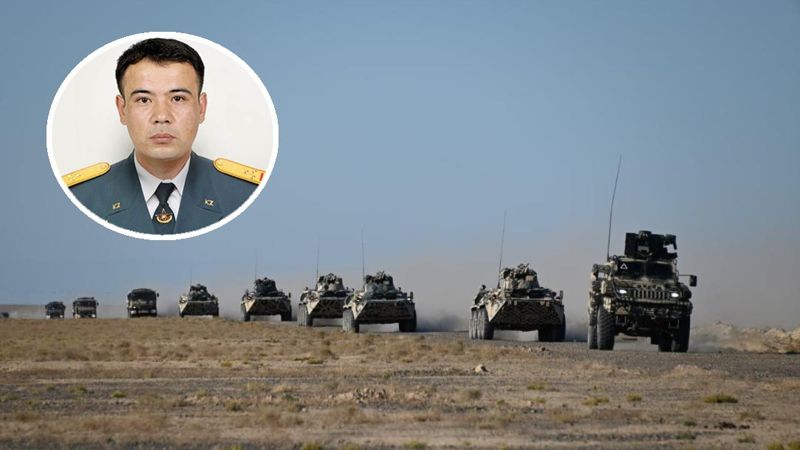
About 7,000 service personnel and some 2,000 pieces of weaponry and military equipment are taking part in the strategic exercise Batyl Toitarys 2026. Its distinctive feature is the integration of ground, air, naval and territorial components with unmanned systems, electronic warfare and digital command and control.
In September 2026, Kazakhstan is conducting Central Asia"s largest military exercise of the year. The strategic command-and-staff exercise Batyl Toitarys 2026 involves about 7,000 personnel and some 2,000 pieces of weaponry and military equipment. But scale is only the most visible aspect of what is taking place.
The structure of the exercise is more revealing. Kazakhstan is simultaneously testing whether its ground, air and naval forces, military command bodies, territorial component and modern technological systems can operate under a single concept.
In effect, the exercise seeks to bring together almost every element that now shapes the modern battlefield: unmanned aerial vehicles (UAVs) and first-person-view (FPV) drones, electronic warfare (EW), layered air defense, digital headquarters, robotics, reconnaissance and highly mobile units.
That is why Batyl Toitarys 2026 matters beyond its size as a Kazakh military event. It offers a view of the direction in which one of Central Asia"s most consequential military establishments is developing.
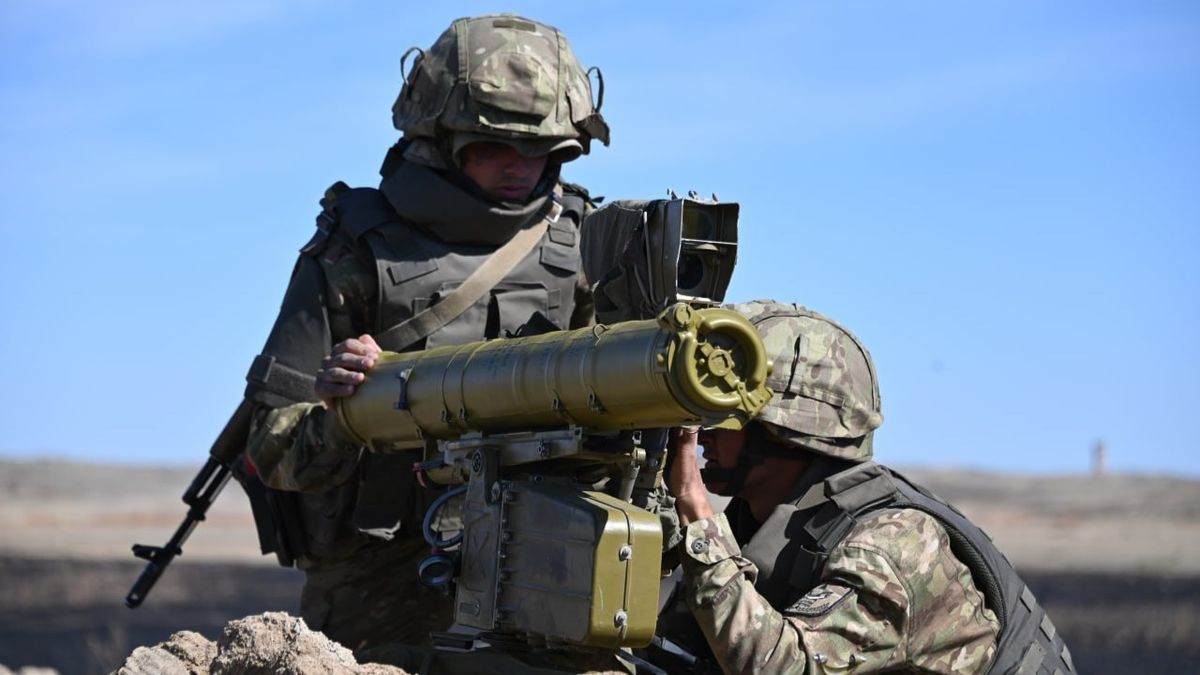
Multiple components, one strategic concept
he defining feature of Batyl Toitarys is the range of forces and activities it brings together.
The air component is represented by the Air Defense Forces exercise Ashyk Aspan 2026, the ground component by Aibalta 2026 and the naval component by the KHAZAR exercise. Beket 2026 covers the territorial and interagency dimension.
A separate international component is linked to the national maneuvers: Frontier 2026, an exercise involving the Collective Rapid Deployment Forces of the Central Asian Region (CRDF CAR) of the Collective Security Treaty Organization (CSTO).
Frontier was conducted under a common concept with Batyl Toitarys. It involved about 1,500 personnel, more than 300 pieces of military and specialized equipment, and 115 UAVs.
Kazakhstan is therefore testing more than a single tank brigade, aviation unit or air-defense system. It is testing whether different elements of its armed forces can work together.
That ability is becoming one of the principal measures of a modern military"s capability. It is no longer enough to possess a capable aircraft, tank or surface-to-air missile system. Intelligence, resilient communications, and command and control must connect them so that information about a target can be turned into a decision and then into action as quickly as possible.
Air defense against a new kind of aerial threat
The air component is particularly instructive. At Saryshagan, Ashyk Aspan 2026 took place within Batyl Toitarys to test readiness to repel massed aerial attacks. Air Force units, air-defense formations and EW units operated together. This differs markedly from a conventional air-defense scenario.
Today, an aerial threat can simultaneously include aircraft, missiles, reconnaissance platforms, strike UAVs and inexpensive FPV systems. Countering such a mix with a single weapons system is virtually impossible.
The exercise covered layered air defense, air-defense ambushes, off-board target designation, rapid repositioning and countermeasures against different types of UAVs.
Radar assets and EW systems were integrated into a shared intelligence and surveillance picture.
This is an important detail. Kazakhstan is effectively testing air defense not as a collection of separate batteries but as a system of systems in which target detection, classification, electronic effects and engagement must form a single chain.
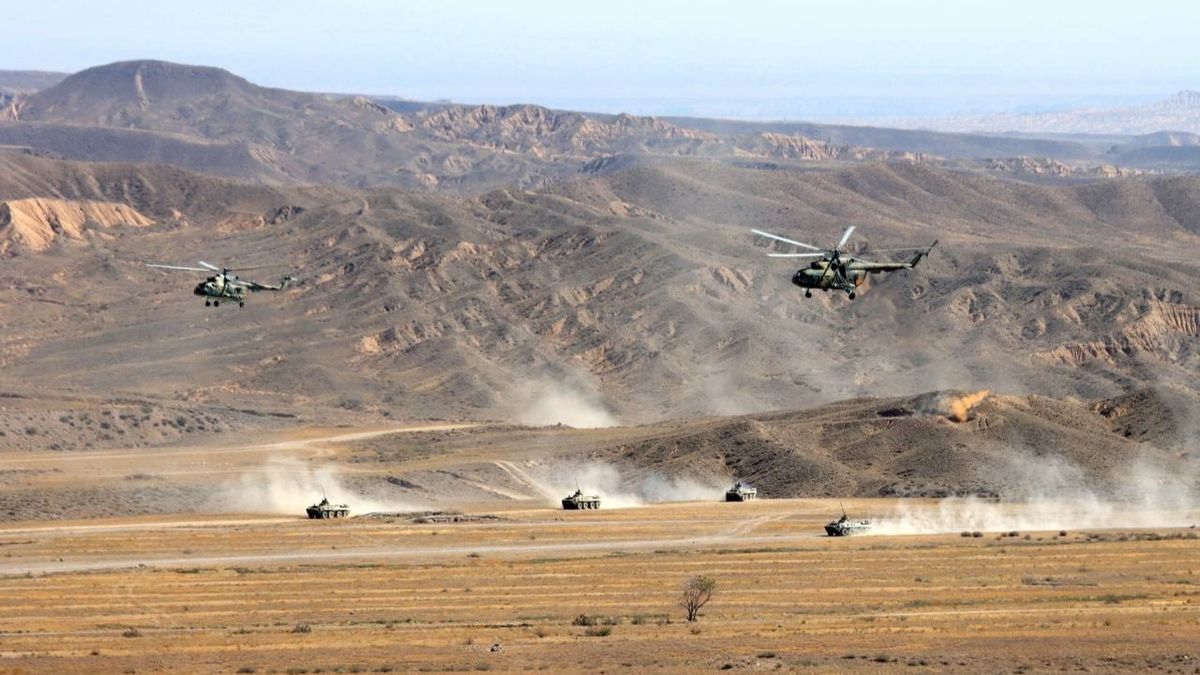
FPV drones are becoming a routine feature of warfare
Only a few years ago, FPV drones were seen as a fairly specialized technology. That has changed radically. Inexpensive drones have become widely used tools for reconnaissance and strikes, forcing armed forces to rethink unit tactics, field fortifications, concealment and air defense at the same time. This trend is also clearly visible in Kazakhstan"s preparations.
During the preparatory phase, units practiced employing UAVs alongside modern reconnaissance and fire-support assets, operating in small groups and fighting from trenches. At the Matybulak training range, troops also improved fighting positions, trenches and shelters in light of recent conflicts. The General Staff called for stronger protection of personnel against drones and other modern means of attack.
The unmanned dimension of Batyl Toitarys therefore has two sides. On one side is the large-scale use of Kazakhstan"s own UAVs and FPV systems. On the other is a layered defense against similar systems used by the simulated adversary: EW, air defense, concealment, field engineering and maneuver.
This is one of the defining characteristics of contemporary armed conflicts, and Kazakhstan is plainly seeking to incorporate those lessons into combat training.
From drones to ground robots
There is a less obvious technological aspect as well. Kazakhstan"s armed forces are gradually beginning to test the potential of unmanned ground systems.
This work was preceded by the Shaiqas military-engineering competition, which tested aerial and ground systems. The most promising designs subsequently gained an opportunity to undergo practical trials alongside troops.
The approach itself deserves attention. Military robotics can look convincing at an exhibition, but the battlefield imposes very different demands: reliability, cross-country mobility, communications resilience, ease of repair and simplicity of operation.
Moving an experimental system from a demonstration hall directly into a major exercise can therefore reveal its practical value relatively quickly. Even fairly simple robotic platforms could eventually perform tasks that pose elevated risks to people, such as reconnoitering dangerous areas, delivering ammunition or evacuating casualties.
A digital headquarters may matter more than a new armored vehicle
In my view, one of the most interesting features of Batyl Toitarys is the trial of a digital headquarters concept. During preparations at Matybulak, senior General Staff officers and defense officials responsible for digitalization separately examined its operation and the supporting information and communications infrastructure.
The purpose of such systems is straightforward. The modern battlefield generates data continuously. A UAV detects an object. A radar picks up an aerial target. A unit reports a change in the situation. Reconnaissance assets obtain coordinates.
If those data streams remain separate, commanders receive a fragmented picture. If they are brought together in a shared information environment, headquarters can see the wider situation and make decisions faster. Speed, in particular, is becoming a decisive factor.
The cycle:
detection → information → decision → tasking → weapon employment
must take as little time as possible.
During Ashyk Aspan, Kazakhstan also tested automated command-and-control systems incorporating elements of artificial intelligence (AI) to support decision-making. This does not, of course, mean handing command over to a machine. Rather, it is an attempt to use automation to process large volumes of information and reduce the burden on commanders.
But the deployment of such technologies in a major strategic exercise demonstrates how rapidly military command and control is changing.
A vast territory demands high mobility
Another factor is easy to underestimate. Kazakhstan is the world"s ninth-largest country by area. Moving troops across that vast territory is therefore a military task in its own right. Batyl Toitarys spans multiple operational areas and training ranges. What matters is not only the movement of units but the entire chain: transport, communications, supply, maintenance, medical support, the deployment of command posts and the integration of arriving forces into the wider operational plan.
Exercises of this kind therefore test more than how accurately a soldier fires or how well a crew handles an armored vehicle. They reveal how effectively the military organization as a whole functions.
The ground component carries this logic forward through Aibalta 2026. The Astana Regional Command exercise separately rehearses planning, decision-making, movement, regrouping and the resilience of command and control.
Even the training of military motorcyclists was directly linked to Batyl Toitarys. The Ministry of Defense said it was needed to improve the mobility of small groups, ammunition delivery and rapid evacuation.
From the steppe to the Caspian Sea
The diversity of the terrain matches the diversity of the forces involved. The air dimension is represented by Ashyk Aspan, the ground dimension by Aibalta, the naval dimension by KHAZAR, and the territorial and interagency dimension by Beket.
In the Caspian Sea, naval forces face tasks quite different from those of units on a land training range. From the standpoint of strategic command, however, the challenge is the same: making different elements function as parts of one system.
That is why the architecture of Batyl Toitarys is its most interesting feature. This is no longer a model in which an army assembles a large quantity of equipment in one area and then stages a sequence of prepared tactical demonstrations.
The exercise follows a much broader logic: different service branches, different parts of the country, different types of threats and different technologies are brought together under unified command.
Kazakhstan as a regional center of military power
Central Asia is undergoing a visible modernization of its military capabilities. Countries across the region are acquiring new aircraft and unmanned systems, developing domestic defense industries, improving air defense and expanding international military cooperation.
Against this backdrop, the scale and substance of Batyl Toitarys 2026 support the view of Kazakhstan as one of Central Asia"s key centers of military power and security coordination.
This is not simply about 7,000 personnel and 2,000 pieces of equipment.
Far more important is the ability to employ the Ground Forces, Air Defense Forces, Navy, territorial component, unmanned systems, EW, and digital command and control at the same time.
A modern military is defined not just by the number of individual platforms it possesses but by its ability to integrate them into a functioning system.
That is the test Kazakhstan is facing this September. If Batyl Toitarys 2026 merits attention beyond Kazakhstan, it is above all because the year"s largest military exercise in Central Asia reveals more than scale. It demonstrates an effort to adapt the armed forces to the fundamentally different technological realities of modern warfare.
By Darkhan Daniyarov
Retired Colonel and Military Expert